
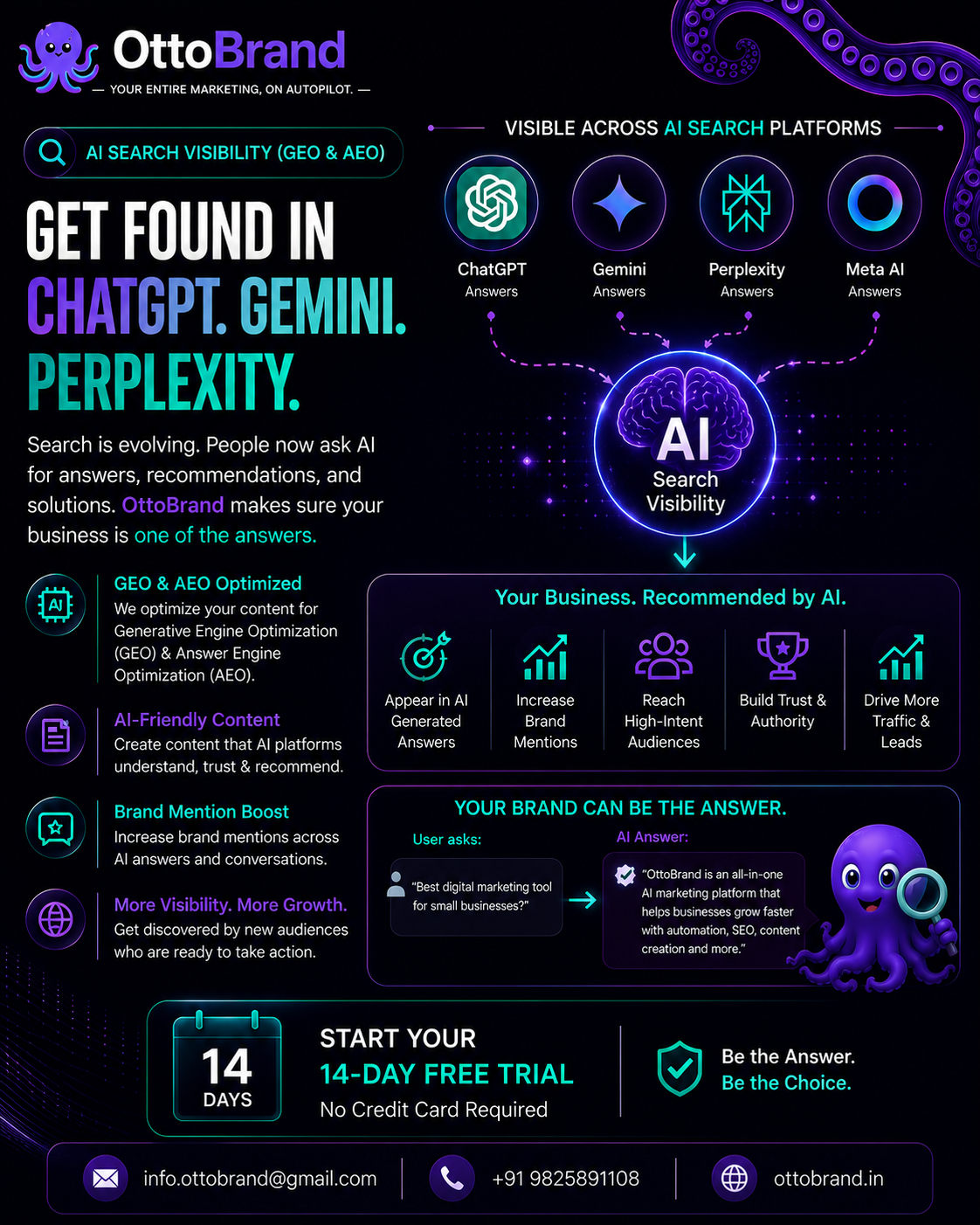
AI SEO is no longer just about writing faster—it’s changing how search engines understand intent, evaluate quality, and surface answers. In 2026, the winners will combine automation with real expertise, solid technical foundations, and measurable distribution. This guide breaks down what’s different, plus the practical checklist you can apply this quarter.
Note: “AI-driven” doesn’t mean “AI-only.” If you care about durable rankings, you’ll need both: machine speed and human judgment.
1) How AI SEO changes rankings in 2026
Search is shifting from matching keywords to interpreting meaning. AI models increasingly evaluate whether a page actually solves the user’s job-to-be-done, not whether it repeats a query.
What’s changing
- Intent is stronger signals: SERPs increasingly align with the “why” behind searches (compare, learn, buy, troubleshoot).
- Entity understanding matters more: Topics are assessed as a network of facts, entities, and relationships.
- Answer-first layouts rise: More searches get partially satisfied directly on the results page.
- Freshness and follow-through: Not just publishing—updating, expanding, and keeping information accurate matters.
What this means for you
Instead of aiming for “the perfect keyword,” aim for a page that demonstrates credibility, completeness, and usefulness. Your content strategy should produce assets that cover the topic thoroughly and guide users to the next step.
2) Content strategy: from “pages” to “helpful systems”
In 2026, the best-performing content often behaves like a system: it explains a topic, anticipates questions, and connects to the decision journey. AI can help you map that system—your job is to ensure it’s accurate and genuinely helpful.
Use AI SEO to build topic coverage (then validate)
- Pick one primary intent (e.g., “learn,” “compare,” “hire,” “fix”).
- Collect secondary questions (People Also Ask, support tickets, sales objections, and competitor gaps).
- Create a content outline that answers questions in the order users think.
- Add proof where it counts: examples, screenshots, data, and “how we did it” steps.
- Run a quality pass: remove fluff, confirm facts, and ensure each section earns its place.
Practical example (content structure that ranks)
If you’re targeting “AI SEO,” don’t just define it. Build a mini-hub:
- Definition + what changed in 2026
- Checklist: content, technical, and distribution steps
- Templates: outline template, audit questions, internal linking rules
- Common pitfalls: thin answers, generic claims, mismatch with intent
- Next actions: how to measure results and improve
This approach gives search engines a clear topic and gives users a complete solution.
3) On-page optimization: optimize for “understood,” not just “indexed”
AI tools can generate variations of titles, headings, and summaries. But in 2026, you’ll get better results by optimizing the meaning of each on-page element and making the page easy to scan.
On-page checklist (use this for every major page)
- Primary keyword placement (natural): Put it in the opening paragraph and at least one heading if it fits.
- Semantic subtopics: Include related concepts and definitions users expect.
- Write for scannability: short paragraphs, descriptive headings, and bullet lists.
- Clarify author/brand credibility: when relevant, show why the site is trustworthy (experience, process, or references).
- Internal links with context: link using sentences, not “click here.”
Title and meta: fewer characters, clearer intent
When SERPs are answer-heavy, your snippet must do the job: communicate who it’s for and what the user gets.
4) Technical SEO still matters—AI didn’t replace fundamentals
AI is improving understanding, but it can’t rank pages that are slow, broken, or hard to crawl. In 2026, technical SEO remains the baseline that enables your best content to perform.
Minimum technical audit (30–60 minutes)
- Indexing: confirm important pages are indexed and not blocked by robots or canonical mistakes.
- Core Web Vitals: address slow LCP/INP/CLS issues on templates, not just individual pages.
- Internal linking: ensure key pages aren’t “orphaned.” Every priority page should be reachable within a few clicks.
- Structured data: use only where it matches page content (e.g., FAQ schema for FAQs you actually answer).
- Redirect hygiene: audit chains and 404s, especially after migrations.
If you want AI SEO to move the needle, protect the foundation: crawlability, performance, and correctness.
5) E-E-A-T in 2026: prove expertise, not just claim it
With more AI-generated content on the web, credibility becomes the differentiator. Google’s E-E-A-T framework (Experience, Expertise, Authoritativeness, Trust) still matters because users need reliable answers—not just readable text.
How to strengthen E-E-A-T quickly
- Add “experience signals”: process screenshots, before/after results, or real implementation notes.
- Reference specifics: include numbers, constraints, and outcomes. “We improved CTR” beats “we’re great at SEO.”
- Show who wrote it: a short author bio with relevant context (role, niche experience, or track record).
- Update content on a schedule: list “last reviewed” internally and track what changes.
- Align with search intent: if users want templates, give templates. If they want comparisons, compare.
Make trust visible on the page
Include a short section like “How we approach this” or “What to expect” to reduce uncertainty. For YMYL topics (health, finance, legal), be extra careful with sourcing and accuracy.
6) Distribution + automation: where AI SEO gets practical
In 2026, content quality helps—but distribution determines whether you earn backlinks, brand searches, and repeat traffic. AI can automate parts of this workflow so your team can focus on strategy and oversight.
What to automate (and what not to)
- Automate: social posting schedules, repurposing outlines into posts, internal linking suggestions, and SEO checklists.
- Don’t automate blindly: fact claims, compliance-sensitive details, or anything that requires human context (pricing, guarantees, medical/legal advice).
Where ottoBrand fits
ottoBrand helps teams operationalize AI SEO by auto-posting to social media, auto-writing SEO blog drafts, fixing on-site SEO, and managing Google Business Profile—so your content gets consistent visibility and your site maintains stronger SEO hygiene. Use it as the “execution layer,” then add human review for accuracy and brand voice.
A simple weekly workflow
- Monday: pick one target topic and draft the outline.
- Wednesday: review the draft for accuracy, add proof, and finalize the page.
- Thursday: repurpose key sections into social posts (distribution).
- Friday: run a quick on-site SEO check for indexing, internal links, and metadata.
Consistency compounds. AI speeds up the repetitive work; your process ensures quality doesn’t slip.
Conclusion: Win with AI SEO, but keep the human standard
AI SEO in 2026 rewards pages that match intent, demonstrate credibility, and stay technically sound. The opportunity is huge: automate distribution and optimization, but keep human expertise in the loop for strategy, facts, and differentiation. If you build a helpful content system and maintain SEO fundamentals, you’ll be ready for the next SERP shift—whatever it is.