
Content marketing has evolved dramatically, and mastering auto blogging is no longer just a futuristic experiment—it is the core engine driving modern organic growth. In 2026, relying purely on manual drafting, keyword tracking, and tedious formatting is a recipe for falling behind competitors who leverage intelligent automation to dominate search engine results pages (SERPs).
Scaling a content operation used to require massive editorial teams, endless spreadsheets, and burnout-inducing writing schedules. Today, advanced AI platforms handle the heavy lifting from end to end. If you want to capture valuable search traffic, establish domain authority, and maintain a consistent publishing cadence without spending 40 hours a week at your keyboard, understanding modern auto blogging is essential.
The Evolution of Auto Blogging: From Spam to Strategic Authority
Years ago, automated content conjured images of unreadable spun paragraphs, keyword stuffing, and instant penalties from search engines. Modern auto blogging bears no resemblance to those early, crude methods. Today's AI platforms utilize sophisticated large language models trained on semantic search intent, contextual relevance, and E-E-A-T guidelines.
Instead of just stringing keywords together, contemporary auto-blogging systems analyze top-ranking competitor pages, extract missing subtopics, integrate proprietary data points, and structure articles with optimal heading hierarchies. The result is content that not only reads like it was written by an industry expert but consistently outperforms human-only workflows in both speed and depth.
- Contextual Understanding: Modern AI comprehends complex buyer intent and search nuances.
- Semantic Optimization: Algorithms naturally weave in Latent Semantic Indexing (LSI) terms without keyword stuffing.
- Dynamic Structuring: Automated tools build custom outlines based on real-time SERP competitor analysis.
Key Components of a Modern Auto Blogging Workflow
Successfully running an automated content engine requires more than just hitting generate. To build a sustainable traffic machine, you need a structured workflow that integrates keyword research, drafting, internal linking, and publishing into a single cohesive pipeline.
First, your system should identify high-opportunity, low-competition keywords with clear commercial or informational intent. Second, the platform must outline the article with a logical flow, incorporating H2 and H3 tags that answer specific user queries. Finally, formatting elements like bullet points, bold emphasis, and FAQs must be applied automatically to maximize readability and dwell time.
- Keyword Discovery: Automatically target keywords with high search volume and manageable difficulty scores.
- Outline Generation: Build comprehensive article structures based on Google's top-ranking results.
- Drafting and Polishing: Produce natural, engaging prose free of robotic phrasing.
- Formatting and Publishing: Instantly push formatted HTML directly to your CMS with correct meta tags and featured images.
Maintaining Google E-E-A-T with Automated Content
One of the biggest concerns marketers have about automated publishing is maintaining Experience, Expertise, Authoritativeness, and Trustworthiness (E-E-A-T). Search engines in 2026 are exceptionally good at detecting thin, generic AI output. To win, your auto-blogging strategy must inject unique value into every single post.
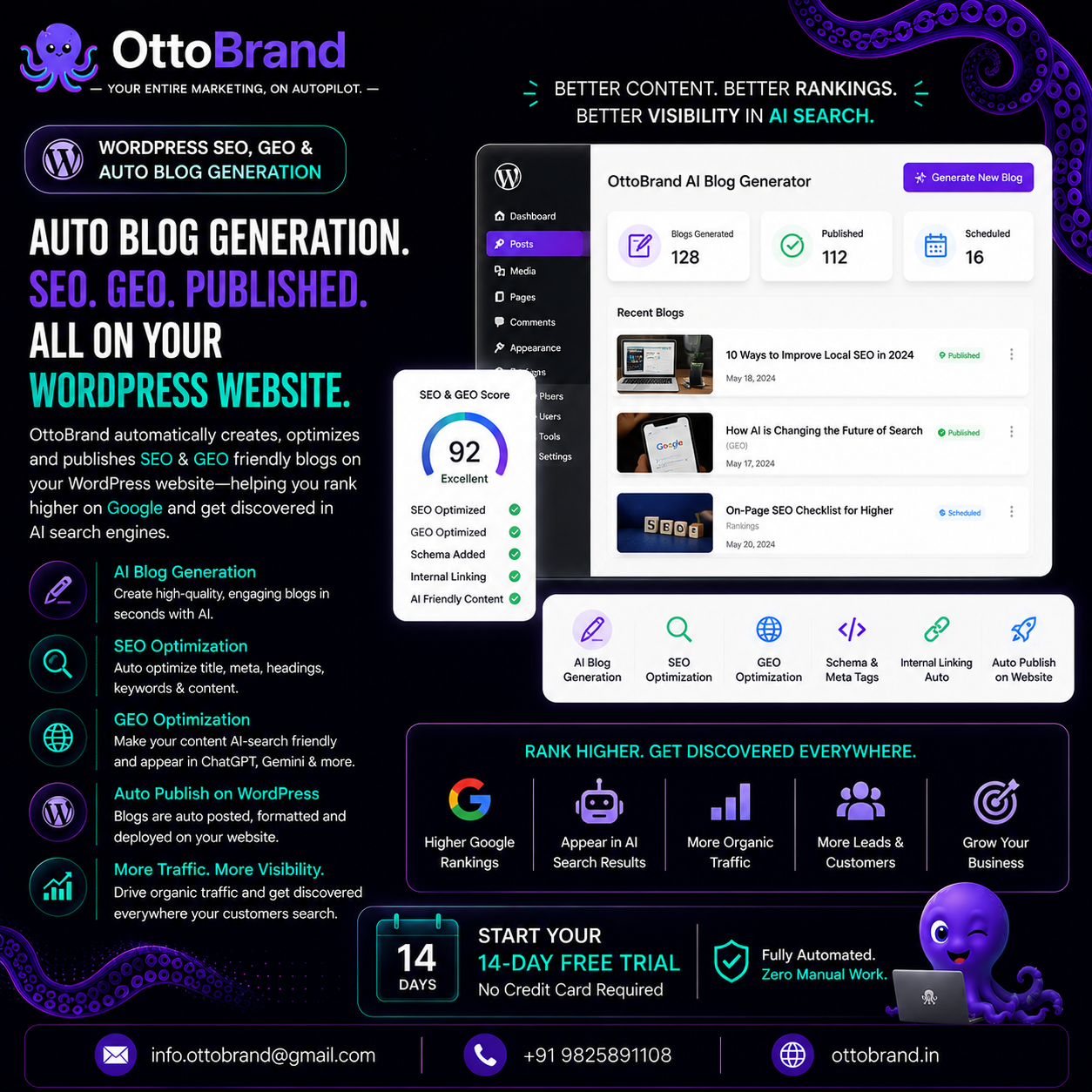
This is where platforms like ottoBrand shine by managing comprehensive SEO strategies on autopilot, ensuring that automated blogs include expert-level insights, accurate stats, and structured data. By feeding your auto-blogging tool specific brand guidelines, proprietary research, and customer case studies, you elevate the output from generic summaries to authoritative thought leadership.
| Traditional Workflow | Modern Auto Blogging |
|---|---|
| Manual keyword research (4 hours) | Instant automated opportunity detection |
| Writing and editing (6 hours per post) | Continuous generation and optimization |
| Inconsistent publishing (2x per month) | Consistent publishing (daily or weekly) |
| High labor costs | Fraction of the cost, higher output |
Structuring Your Content for Maximum SERP Visibility
Writing a great article is only half the battle; ensuring search engines and users can easily parse your content is critical. Automated blogging tools excel at applying structural best practices consistently across hundreds of pages without human fatigue.
Every article generated through your auto-blogging system should feature a compelling meta title, a click-worthy meta description, and a clear semantic hierarchy. Furthermore, integrating structured data such as FAQ schema helps your content capture valuable rich snippets in search results, driving higher click-through rates.
“Automation doesn't replace editorial strategy; it amplifies your capacity to execute that strategy at scale.”
By letting software handle the repetitive execution tasks—like optimizing heading tags, generating alt text, and formatting lists—your team can focus entirely on high-level strategy, product positioning, and unique brand messaging.
Measuring the ROI of Your Automated Content Engine
Scaling up your blog output naturally leads to questions about return on investment. Unlike traditional content agencies that charge per word or per article with unpredictable results, auto blogging offers a highly scalable economic model where marginal cost per article drops close to zero.
To measure success accurately, track metrics such as organic impression growth, average keyword rankings, click-through rates from Google Search Console, and assisted conversions. You will typically see a compounding traffic curve as your total indexed page count grows from dozens to hundreds of targeted, optimized articles.
- Indexed Pages: Monitor how quickly new automated posts enter Google's index.
- Ranking Velocity: Track the time it takes for new posts to break into the top 20 search results.
- Organic Traffic Growth: Measure month-over-month increases in non-paid visitors.
Getting Started with Auto Blogging Today
Implementing an automated blogging strategy does not require a computer science degree or a complex custom-coded API setup. Modern all-in-one marketing platforms make it simple to connect your website, define your brand voice, and set up a content calendar in minutes.
Whether you choose to review every draft before publication or trust a fully autonomous workflow, the key is consistency. By establishing a reliable publishing cadence today, you build the domain authority and topical relevance required to outrank slower competitors.
If you want to streamline this entire process—from keyword discovery and auto-writing SEO blogs to fixing on-site technical issues and syncing your social media presence—tools like ottoBrand handle every aspect on autopilot so you can focus on growing your business.
Conclusion
Mastering auto blogging in 2026 is the ultimate competitive advantage for businesses looking to scale their digital footprint without exploding their marketing budgets. By combining smart AI execution with strict adherence to E-E-A-T principles, you can build a relentless organic traffic engine. Embrace automation, maintain high content standards, and watch your search visibility soar.